Fluid movement improves heat transfer by bringing hotter and cooler portions of that fluid into contact, initiating higher rates of conduction at a large number of sites. Therefore, the rate of heat transfer through a fluid is much higher by convection than by conduction. In fact, the higher the speed of the fluid, the greater the speed of heat transfer.
Example: Experience shows that CONVECTION HEAT TRANSFER COEFFICIENT depends with intensity on the properties dynamic viscosity m, thermal conductivity k, density r and specific heat cp of the fluid, as well as on the fluid velocity V.
es: coeficiente de transferencia de calor por convección
Critical Reynold’s number
noun
The Reynolds number at which the flow becomes turbulent is called the critical Reynolds number. The value of this critical number is different for different geometric configurations.
Example: The Reynolds number at which the flow becomes turbulent is called the CRITICAL REYNOLDS NUMBER
es: Numero critico de reynolds
Friction Coefficient
NOUN
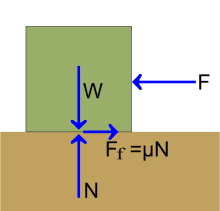
Coefficient of friction is defined as the ratio of the force required to move tow sliding surfaces over each other, and the force holding them together
Example: Therefore, it is concluded that the FRICTION COEFFICIENT for a given geometric configuration can be expressed in terms of the Reynolds number Re, and only of the dimensionless spatial variable x (instead of being expressed in terms of x, L, V, r and m ). This is a very significant finding and shows the value of dimensionless equations.
es: Coeficiente de fricción
Kinematic viscosity
noun
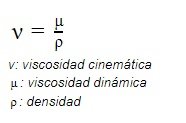
Kinematic viscosity is a measure of a fluid's internal resistance to flow under gravitational forces. It is determined by measuring the time in seconds, required for a fixed volume of fluid to flow a known distance by gravity through a capillary within a calibrated viscometer at a closely controlled temperature.
Example: The units of KINEMATIC VISCOSITY are set in time and area. It is the relationship between the dynamic viscosity and its density, an amount independent of force.
es: Viscosidad cinemática
Laminar flow
noun
It is called laminar flows, the movement of a fluid when it is ordered, stratified and smooth. In laminar flow the fluid moves in parallel sheets without intermingling and each fluid particle follows a path called the streamline.
Example: Some fluids are smooth and orderly, while others are somewhat chaotic. The intensely ordered movement of fluids, characterized by smooth layers, is known as LAMINAR FLOW.
es: Flujo laminar
Nusselt number
noun
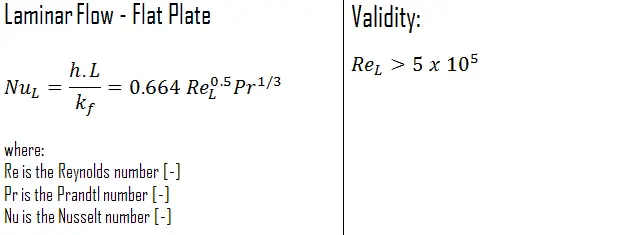
The Nusselt number represents the enhancement of heat transfer through a fluid layer as a result of convection relative to conduction through the same layer. The higher the Nusselt number, the more efficient the convection
Example: It is also common practice to remove the dimensions of the heat transfer coefficient h with the NUSSELT NUMBER, which is defined as where k is the thermal conductivity of the fluid and Lc is the characteristic length.
es: Numero de Nusselt
Prandtl number
noun
The Prandtl number (Pr) is a dimensionless number proportional to the quotient between the diffusion rate of the amount of moment (viscosity) and the thermal diffusivity.
Example: In heat transfer problems the PRANDTL NUMBER controls the relative thickness of the moment and thermal boundary layers. When Pr is small it means that the heat diffuses very fast compared to the velocity (moment).
es: Numero de Prandtl
Reynold number
noun
The Reynolds number (Re) is a dimensionless number, to characterize the motion of a fluid. Its value indicates whether the flow follows a laminar or turbulent pattern.
Example: Osborn Reynolds discovered that the flow regime depends primarily on the ratio of the inertial forces to the viscous forces in the fluid. This ratio is known as REYNOLDS NUMBER, which is a dimensionless quantity and is expressed for external flow
es: Numero de Reynolds
Shear stress
NOUN
shear stress, force tending to cause deformation of a material by slippage along a plane or planes parallel to the imposed stress. Shear stress may occur in solids or liquids; in the latter it is related to fluid viscosity.
Example: The force of friction per unit area is called the shear stress and is denoted by t. Experimental studies indicate that, for most fluids, the SHEAR STRESS is proportional to the velocity gradient, and the shear stress at the wall surface.
Turbulent flow
noun
Turbulent flow, type of fluid (gas or liquid) flow in which the fluid undergoes irregular fluctuations, or mixing, in contrast to laminar flow, in which the fluid moves in smooth paths or layers.
Example: The highly disorderly movement of fluids that generally occurs at high velocities and is characterized by fluctuations in velocity is known as TURBULENT FLOW.